 The Playbook Desk
Progress Bars for Real Life: What Casumo's Playful Design Teaches Us About Motivation
Productivity writers love to borrow from unlikely sources — pilots gave us checklists, factory floors gave us kanban. Here's a less obvious teacher: an online casino. Casumo, founded in Malta in 2012, built its reputation not on games themselves but on how it wrapped them — a playful, gamified experience with progress systems, milestones and a warm Scandinavian-flavoured visual identity that felt closer to a friendly mobile app than anything in its industry. Strip away the context and what remains is a masterclass in motivational design. The same mechanics that keep users engaged with an entertainment platform map, with surprising precision, onto the eternal productivity problem: why we abandon the systems we build for ourselves.
Make Progress Visible, or It Doesn't Exist
The core of gamified design is relentless feedback. From its early years, Casumo turned user activity into visible advancement — levels, milestones, a sense of a journey unfolding — so that engagement always produced an immediate, tangible signal of movement.
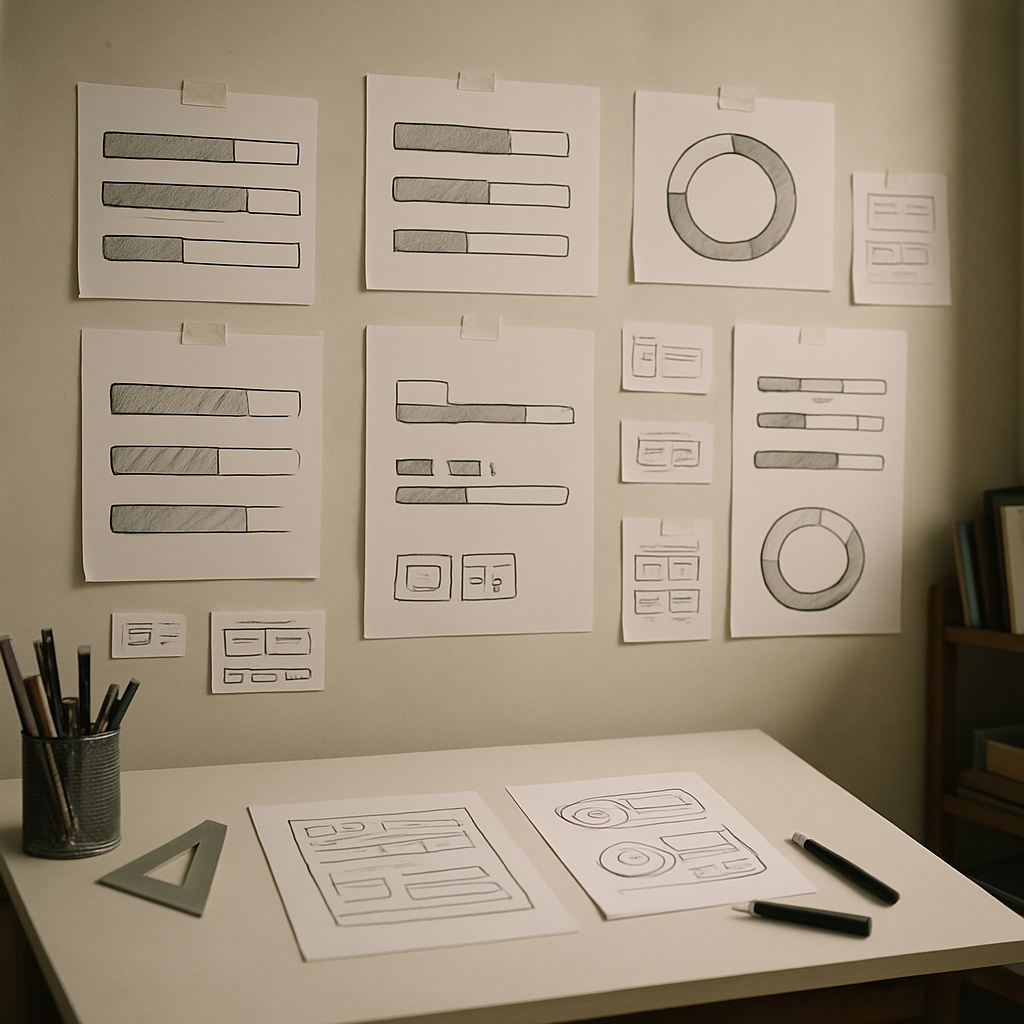
Contrast that with a typical work project: weeks of effort with no feedback except a distant deadline. Behavioural research is unambiguous about which design wins. Teresa Amabile's work on the progress principle found that the strongest driver of motivation during a workday is simply seeing progress on meaningful work — and that people routinely can't see it without help. The lesson isn't to add confetti to your task manager. It's to structure work so progress becomes perceivable: milestones small enough to hit weekly, a Done column that accumulates rather than vanishes, a habit tracker whose chain grows. What Casumo engineered for delight, you can engineer for persistence.
Personality Lowers the Cost of Showing Up
Gamified mechanics get the analysis, but half of what made the brand distinctive was tone. Casumo's identity — soft shapes, gentle humour, a mascot-driven friendliness rooted in its founders' Scandinavian design sensibilities — made the product feel light in a category that usually feels heavy. That lightness matters more than it seems, because emotional friction is a real cost. Every interaction with something that feels sterile or punishing adds a small reason to avoid it tomorrow.
Your personal systems have a tone too. A task list that greets you with 47 overdue items in red is a system that punishes you for opening it — and unopened systems die. The design lesson: build rituals and tools you mildly enjoy touching. A clean weekly review template, a notebook you like, a planning session paired with good coffee. Sustainable systems are ones with low emotional entry fees, and pleasantness, far from being decoration, is load-bearing.

Small Rewards, Immediate Loops
Traditional goal-setting runs on delayed gratification: work for months, get rewarded at the end. Gamified design inverts this, chopping the journey into short loops where action produces acknowledgment within seconds. It's the same insight habit researchers keep arriving at — behaviour that's reinforced immediately repeats; behaviour reinforced someday mostly doesn't.
The practical translation is celebration at a smaller grain. Finish a writing session, log the word count and watch the weekly total climb. Close a hard task, physically move its card to Done. These micro-rewards look trivial, but they're doing the same job as any well-designed progression system: converting an abstract long-term goal into a series of near-term wins your brain actually responds to. What platforms like Casumo understood commercially — that people stay engaged with journeys, not destinations — applies just as well to the journey of a quarter-long project.
Where the Analogy Ends — and Why That's Instructive
Credibility requires the caveat: engagement mechanics in gambling exist to extend play, and the industry's smarter operators know this cuts both ways. Notably, Casumo has invested in the responsible-gaming side of the same coin — deposit limits, session reminders, self-assessment tools — mechanics designed to help users notice and cap their own behaviour.
That mirror image completes the productivity lesson. Motivation design has a shadow: streaks can become tyranny, metrics can become the goal, and a gamified system can keep you busy without keeping you effective. The fix is the same one the industry adopted — build in circuit breakers. A weekly review that asks whether the tracked behaviour still serves the actual goal. Rest days that don't "break the chain." Metrics you're willing to delete. Gamify the starting, not the self-worth.
Borrowing Well
The takeaway isn't to turn your workday into a game; it's to respect what game-like design knows about humans. We persist when progress is visible, when feedback is fast, when the experience carries some warmth, and when the system includes honest brakes. Casumo built a distinctive brand by applying those principles more thoughtfully than its competitors. Applied to your own systems — trackers, boards, reviews, rituals — the same principles do something quieter but more valuable: they keep you showing up long after novelty fades. Motivation, it turns out, is a design problem. Design accordingly.